SAM-e (S-Adenosylmethionine)
SAM-e (S-adenosylmethionine) is a naturally occurring methyl donor central to producing the monoamine neurotransmitters. Randomized trials support an antidepressant effect, including as an add-on when SSRIs are insufficient, and it has some evidence for osteoarthritis pain. It is generally well tolerated but can trigger mania in people with bipolar disorder and may interact with serotonergic drugs.
Neurotransmitters
Where to buy
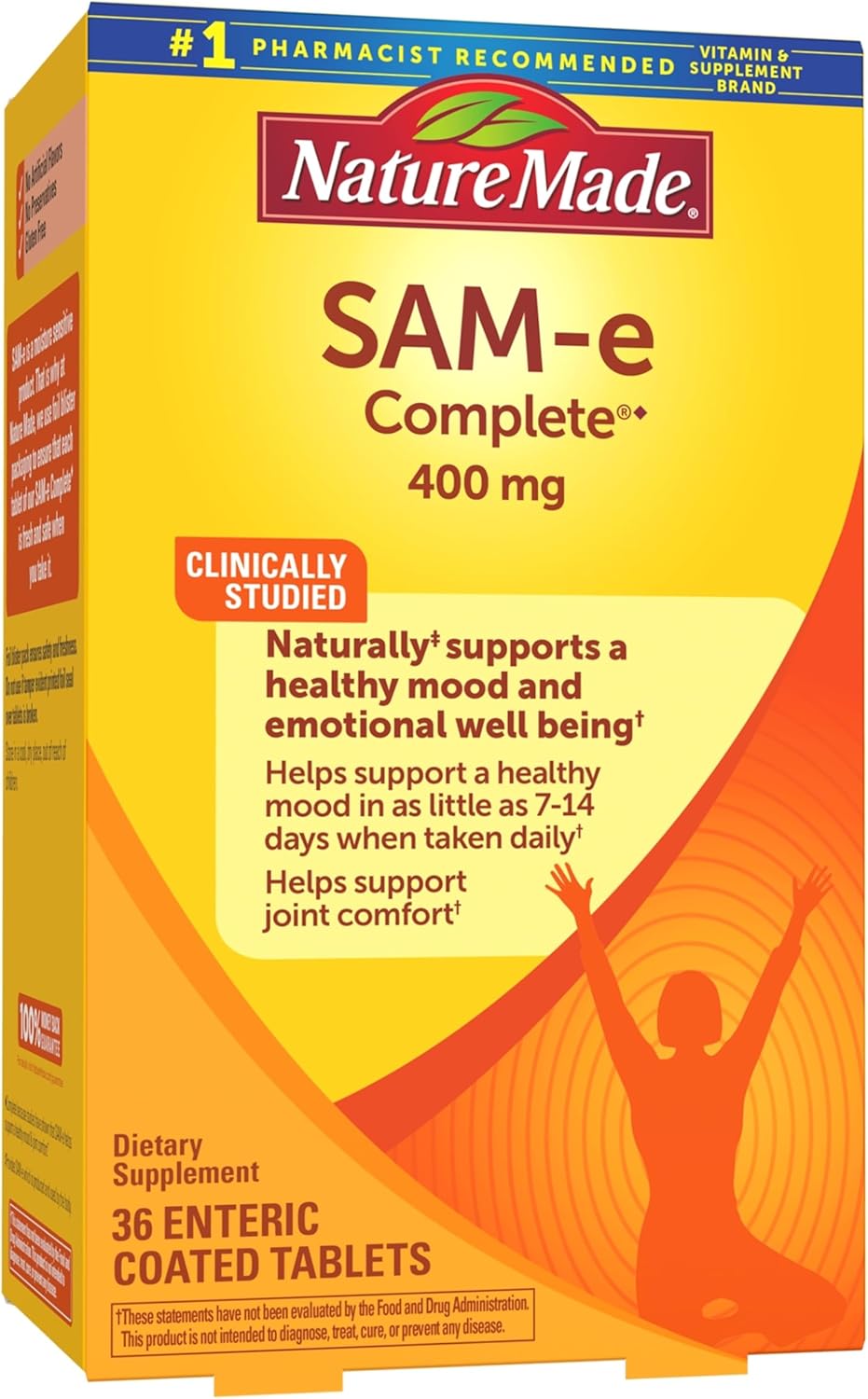
Popular SAM-e (S-Adenosylmethionine) products on Amazon. Not medical advice — talk to a clinician before starting a supplement.



As an Amazon Associate, Neurotransmission earns from qualifying purchases.
Books (3)
 SAMe (S-Adenosylmethionine): The European Arthritis and Depression Breakthrough
 The SAM-e Handbook: The Fast, Natural Way to Overcome Depression, Relieve the Pain of Arthritis, Alleviate the Discomfort of Fibromyalgia, and Boost Your Energy
 The SAM-e Solution: The Essential Guide to the Revolutionary Antidepression Supplement
Research (10)
- S-adenosyl-l-methionine antidepressant-like effects involve activation of 5-HT(1A) receptors Sales et al. (2023) Full text ↗ PubMed ↗
- Possible SAMe-induced mania Abeysundera et al. (2018) Full text ↗ PubMed ↗
- Nutritional psychiatry: the present state of the evidence Marx et al. (2017) PubMed ↗
- S-Adenosyl Methionine in the Therapy of Depression and Other Psychiatric Disorders Karas (2016) Full text ↗ PubMed ↗
- [Other therapeutic strategies] Saba et al. (2016) Full text ↗ PubMed ↗
- [S-adenosyl L-methionine in CNS diseases] Krzystanek et al. (2011) PubMed ↗
- S-Adenosylmethionine and methylation Chiang et al. (1996) PubMed ↗
- The clinical potential of ademetionine (S-adenosylmethionine) in neurological disorders Reynolds et al. (1994) Full text ↗ PubMed ↗
- Neuropharmacology of S-adenosyl-L-methionine Baldessarini (1987) Full text ↗ PubMed ↗
- S-adenosylmethionine and affective disorder Carney et al. (1987) Full text ↗ PubMed ↗
Links
Community
Log in to rate and share your notes.
No contributions yet.