Caffeine
Caffeine, found in coffee and tea, is the world’s most widely used stimulant; it blocks adenosine receptors to increase alertness and reduce perceived fatigue, indirectly raising dopamine and norepinephrine. Moderate intake is well studied and associated with improved attention and reaction time and, observationally, with lower risk of several chronic diseases. Downsides include tolerance, dependence with withdrawal headaches, anxiety and insomnia at higher doses, and disrupted sleep when taken late.
Too little may be associated with
Grogginess for habitual users; no true requirement.
Too much may be associated with
Anxiety, insomnia, palpitations, dependence.
Informational only — not medical advice.
Benefits
Improves alertness, mood, reaction time, and endurance performance; moderate coffee or tea intake correlates with several favorable health outcomes.
Risks
Produces dependence and withdrawal headaches; excess causes anxiety, insomnia, palpitations, and raised blood pressure. Pregnancy, arrhythmia, and sensitivity warrant lower limits.
Informational only — not medical advice.
Neurotransmitters
Hormones
Body systems
Organs
Related
Where to buy
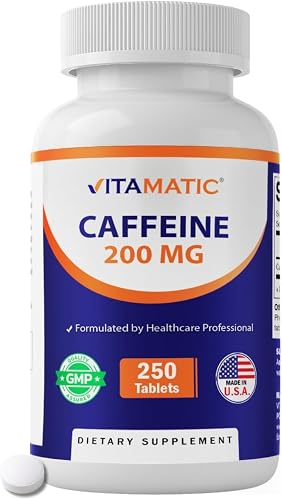
Popular Caffeine products on Amazon. Not medical advice — talk to a clinician before starting a supplement.



As an Amazon Associate, Neurotransmission earns from qualifying purchases.
Books (1)

Research (19)
- [Nutrition in improving sleep quality and fighting insomnia] Ortega et al. (2025) Full text ↗ PubMed ↗
- Evidence-based cesarean delivery: postoperative care (part 10) Mackeen et al. (2025) Full text ↗ PubMed ↗
- YAP/TAZ Signaling in the Pathobiology of Pulmonary Fibrosis Papavassiliou et al. (2024) Full text ↗ PubMed ↗
- Molecular targets of caffeine in the central nervous system Bhardwaj et al. (2024) Full text ↗ PubMed ↗
- Current coffee consumption is associated with decreased striatal dopamine transporter availability in Parkinson's disease patients and healthy controls Wang et al. (2023) Full text ↗ PubMed ↗
- Synergistic Effect of Rhodiola rosea and Caffeine Supplementation on the Improvement of Muscle Strength and Muscular Endurance: A Pilot Study for Rats, Resistance Exercise-Untrained and -Trained Volunteers Li et al. (2023) Full text ↗ PubMed ↗
- How to Optimize the Effectiveness and Safety of Parkinson's Disease Therapy? - A Systematic Review of Drugs Interactions with Food and Dietary Supplements Agnieszka et al. (2022) Full text ↗ PubMed ↗
- Role of diet in hyperuricemia and gout Danve et al. (2021) Full text ↗ PubMed ↗
- The Cognitive-Enhancing Outcomes of Caffeine and L-theanine: A Systematic Review Anas et al. (2021) Full text ↗ PubMed ↗
- Health Benefits and Chemical Composition of Matcha Green Tea: A Review Kochman et al. (2020) PubMed ↗
- GABA-enriched teas as neuro-nutraceuticals Hinton et al. (2020) Full text ↗ PubMed ↗
- GABA and l-theanine mixture decreases sleep latency and improves NREM sleep Kim et al. (2019) Full text ↗ PubMed ↗
- Angiotensin II for the Treatment of Vasodilatory Shock Khanna et al. (2017) Full text ↗ PubMed ↗
- 36th International Symposium on Intensive Care and Emergency Medicine : Brussels, Belgium. 15-18 March 2016 Liu et al. (2016) Full text ↗ PubMed ↗
- The mitochondrial deubiquitinase USP30 opposes parkin-mediated mitophagy Bingol et al. (2014) Full text ↗ PubMed ↗
Links
Community
Log in to rate and share your notes.
No contributions yet.